
"coffee cup transport"
5000 article(s) found

What is the Ethiopian Red Cherry Project? Altland Manor in the sun Yega Chuefei
Red Cherry Project about the Red Cherry Project OPERATION CHERRY RED said that many friends of the Red Cherry Project are no stranger to the name. So what kind of project is the Red Cherry Project? Maybe only a few people can tell. In Ethiopia, which is known as the birthplace of coffee, there is a large area of fine traditional coffee trees.

Introduction to the characteristics of Bolivian Coffee Flavor and Taste Manor
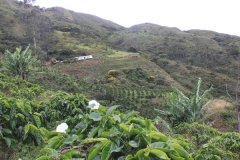
Arabica coffee cannot be grown in cold places above 2000 meters above sea level. if the altitude is too high, coffee trees will frost because the temperature is too low. So Bolivian coffee is mainly grown in the Yungas region northeast of La Paz. It borders the Amazon basin and is about 1500-2500 meters above sea level with an average annual temperature of about 10-15 ℃. Therefore, it ensures the growth of coffee.

Bolivian coffee grinding method Variety characteristics Production area of fine coffee beans Introduction
Presidential elections were held on 18 December 2005. Evo Morales, leader of the Aymara Indian Movement for Socialism in Bolivia, won the election with 53.75% of the vote and took office on January 22, 2006. He became the first Native American president of Bolivia and the first leftist president of Bolivia. It began with progressive communal socialism (Indian socialism).

How to drink Ugandan coffee beans?
Uganda is one of Africa's leading coffee producers, accounting for more than 70% of its total exports, while Uganda is also the home and major producer of Robbs specialty coffee. In the 1960s Uganda's coffee production remained at 3.5 million bags per year. By the mid-1980s, largely for political reasons, coffee production had fallen to 2.5 million bags a year. But coffee production is on the rise again, and it's big now.

Introduction of high-quality coffee beans in Bolivian coffee flavor and taste areas
Bolivia was rescued from independence by Bolivar, a national hero from Caracas, Venezuela, during the War of Independence in Latin America in the 18th century, so the country was named after him. On August 6, 1825, independence from Spain was declared, named the Bolivarian Republic, and later changed to its present name. It formed a federation with Peru in 1836 and collapsed as a result of the Chilean invasion in 1839. one hundred and eighty six

Sour Bolivian Coffee Flavor description Grinding degree Taste characteristics of Fine Coffee in producing area
The early Bolivian coffee was of low quality and the market was very poor. Usually the picked coffee fruit is bumped all the way to the processing plant after a simple peeling treatment. Due to the imperfect infrastructure, the traffic is underdeveloped. Coffee farmers have to overcome the rugged mountain road and transport the beans to the higher altitude area of La Paz for washing. If the coffee fruit can not be delivered to the processing in time

Brief introduction of rich and unique treatment methods for grinding degree and baking degree of Bolivian boutique coffee beans
Bolivia has made a lot of efforts to improve the quality of coffee, stimulate the enthusiasm of coffee farmers and make coffee farmers have a deeper understanding of fine coffee. After the introduction of the COE competition, in the first COE competition held in 2004, there were 13 boutique bean cups with a total score of more than 84 points, and the champion bean score was as high as 90.44 points.

A brief introduction to the description of flavor, taste and aroma characteristics of coffee beans in rich and balanced Xuemai Manor.
The overall taste of Bolivian coffee is rich and balanced, the aroma is rich and unique, similar to the mixture of flower and fruit aroma, impressive. The perennial low temperature environment makes the coffee fruit grow slowly, compact enough, the aroma is also charming, the floral aroma is obviously medium and low acidity, but the feeling is not monotonous, on the contrary, it appears soft and fresh, with the sour taste of citrus fruit. Bolivia, no.

Bolivian fine coffee beans with dried almond flavor Taste Aroma Description
Bolivia not only has a unique growing environment, but also has an excellent coffee variety Typica. For 200 years, the coffee varieties in Yangas have been dominated by the ancient Tibica. The Tibica variety has a balanced and soft flavor, with lively aromas and rich acidity. Unfortunately, Tibica's yield is low and its disease resistance is poor, making Bolivia's

Introduction to the flavor and taste of Bolivian coffee with rich sour taste
In the past, most of the coffee in Bolivia was of mediocre quality, but in recent years, the production of boutique coffee has developed rapidly, and there have been a lot of pretty good beans. In recent years, the COE (Cup ofexcellence) system, which was first implemented in Brazil, has become more and more popular. Bolivia has also introduced this system, which can stimulate the enthusiasm of coffee farmers on the one hand and improve it on the other.

What are the characteristics of mocha coffee? Is mocha single coffee or fancy coffee? Mocha Coffee Fancy
Morning, when the light through the French windows into the house, think, a cup of coffee, a wisp of fragrance, an inch of sunshine, a memory because charming mocha always bring me beautiful mood! In fact, authentic mocha coffee is produced only in Yemen, southwest of the Arabian Peninsula, growing on steep mountain sides at altitudes of 3,000 to 8,000 feet, and is the oldest coffee in the world. mocha
Flavor characteristics of Bolivian Rosa Coffee beans the story of Bolivian Rosa cousin Java Coffee
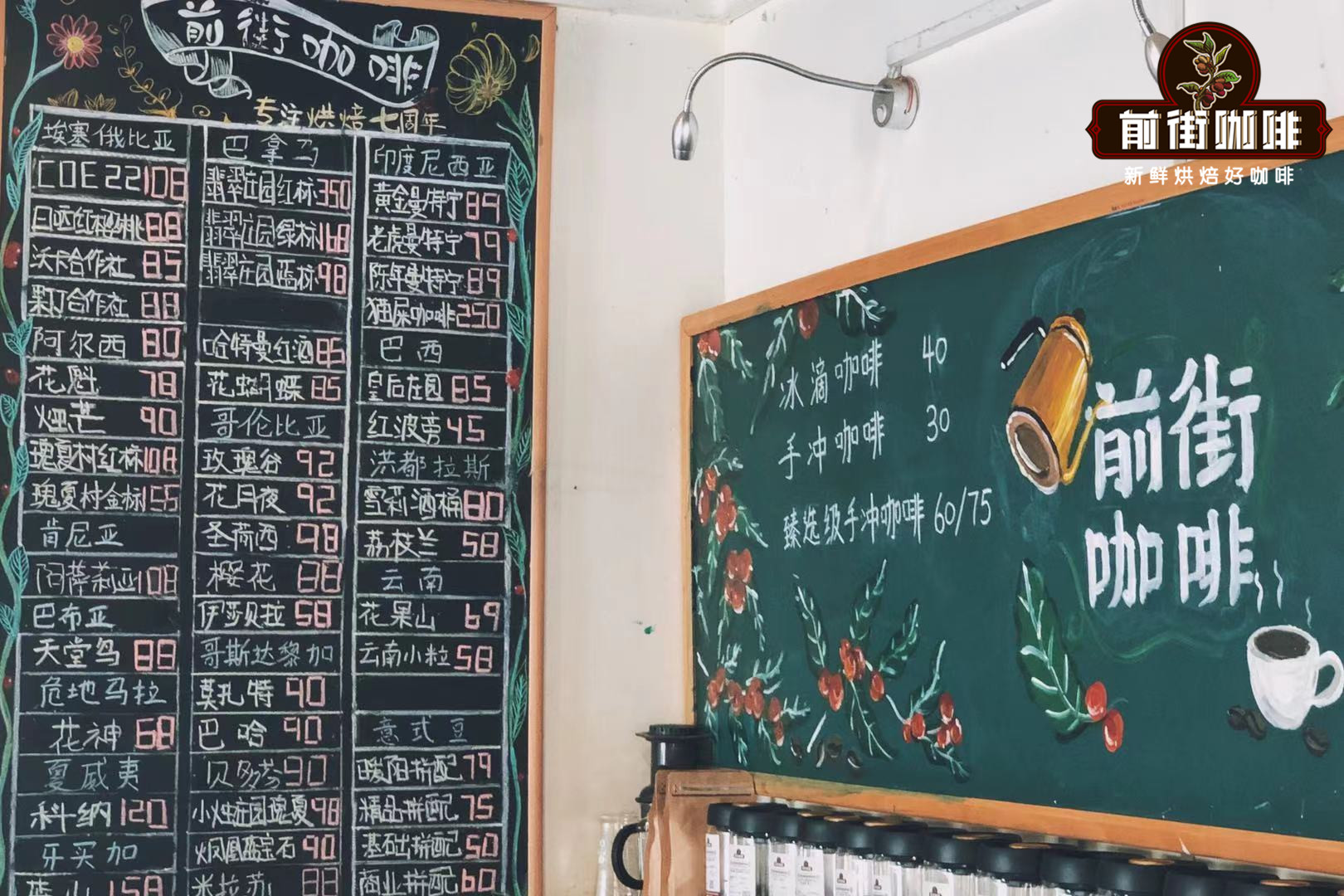
Professional coffee knowledge exchange more coffee bean information please follow the coffee workshop (Wechat official account cafe_style) Bolivia is an interesting place, although it is known as the paradise of coffee growth, but its production has not been high. Qianjie Coffee has been served in Bolivian coffee several times, and its exquisite flavor is very impressive. The history of Bolivia is very interesting, though

A brief introduction to the treatment method of grinding degree and baking degree of fine coffee beans in Xuemai Manor with rich and unique aroma.
We know that Arabica coffee cannot be grown in cold places above 2000 meters above sea level. if the altitude is too high, coffee trees will frost because the temperature is too low. So Bolivian coffee is mainly grown in the Yungas region northeast of La Paz. It borders the Amazon basin and is about 1500-2500 meters above sea level with an average annual temperature of about 10-15 ℃. Therefore, guarantee

A brief introduction to the treatment method of grinding degree and baking degree of Bolivian boutique coffee beans with balanced taste
Bolivia has made a lot of efforts to improve the quality of coffee, stimulate the enthusiasm of coffee farmers and make coffee farmers have a deeper understanding of fine coffee. After the introduction of the COE competition, in the first COE competition held in 2004, there were 13 boutique bean cups with a total score of more than 84 points, and the champion bean score was as high as 90.44 points.

Brazilian coffee, Brazil is a big coffee country in the world.
Brazilian coffee generally refers to coffee produced in Brazil. There is a wide variety of Brazilian coffee, the vast majority of which are unwashed and sun-dried, classified according to the name of the state of origin and the port of transport. Brazil has 21 states and 17 states produce coffee, but four of them produce the largest, accounting for 98% of the country's total output. Brazilian coffee has a low sour taste, which goes well with coffee.

A brief introduction to the history and culture of the origin and development of Bolivian boutique coffee beans with balanced taste
Bolivia has made a lot of efforts to improve the quality of coffee, stimulate the enthusiasm of coffee farmers and make coffee farmers have a deeper understanding of fine coffee. After the introduction of the COE competition, in the first COE competition held in 2004, there were 13 boutique bean cups with a total score of more than 84 points, and the champion bean score was as high as 90.44 points.
How is the coffee delivered from the farm to the cup? What process does it take for coffee to be roasted?
Coffee grows best in countries near the equator. We usually divide these countries into three categories: central / South America, Africa and the Pacific. If you are in the United States, none of these places are particularly close, so today we will outline how coffee goes from the farm to your cup. This is often referred to as the supply chain, although the boutique coffee industry usually uses the term value chain, and we will use its physics

A brief introduction to the origin, development, history and culture of high-grade vanilla sweet Bolivian boutique coffee beans
In the past, most of the coffee in Bolivia was of mediocre quality, but in recent years, the production of boutique coffee has developed rapidly, and there have been a lot of pretty good beans. In recent years, the COE (Cup ofexcellence) system, which was first implemented in Brazil, has become more and more popular. Bolivia has also introduced this system, which can stimulate the enthusiasm of coffee farmers on the one hand and improve it on the other.

Introduction of Bolivian Coffee Flavor description, Grinding degree, Variety characteristics, Price and taste
In 1932, the Chaco War broke out between Bolivia and Paraguay for oil resources in the North Chaco region. Bolivia was defeated and lost a large area of territory. The people's armed uprising broke out in April 1952, and Paisdensolo, leader of the nationalist revolutionary movement, became president. Since then, there have been frequent military coups and long-term political instability. Modern assets with South American characteristics were restored in October 1983

A brief introduction to the Market Price of High-quality Fine Coffee Bean varieties in Xuemai Manor
The early Bolivian coffee was of low quality and the market was very poor. Usually the picked coffee fruit is bumped all the way to the processing plant after a simple peeling treatment. Due to the imperfect infrastructure, the traffic is underdeveloped. Coffee farmers have to overcome the rugged mountain road and transport the beans to the higher altitude area of La Paz for washing. If the coffee fruit can not be delivered to the processing in time